
You are using an out of date browser. It may not display this or other websites correctly.
You should upgrade or use an alternative browser.
You should upgrade or use an alternative browser.
2" Format Phenolic Driver for Two-Way Systems
- Thread starter THD+N
- Start date

My wife drank one of those THC infused drinks in a can a few weeks ago at the advice of a camper camping with us and it knocked her out for the late afternoon/early evening. She has neck pain issues and thought it may help alleviate some of the discomfort, but she said it made her feel weird. She gave the other 3 away!
I'm very happy with the DPL1PH so far. It does seem to have smoothed out (and more dynamic) with more playtime.
I've been looking for a 2" phenolic driver like this for a while with extended frequency response that actually sounds good. I can't believe I stumbled upon it.
Great comments Joe. Interesting to see what JE finds.
I've been looking for a 2" phenolic driver like this for a while with extended frequency response that actually sounds good. I can't believe I stumbled upon it.
Great comments Joe. Interesting to see what JE finds.

More set up points:
About 50 hours in on these drivers, the break-in point is about 40 hours.
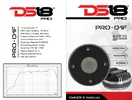
But this driver is WAY TOO HOT for this listener. (I'm old and stuff and have always preferred a vintage rolled off sound.) The Manufacturer provided frequency response for the predecessor model well illustrates there is about 6 db too much treble.
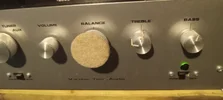
I've rearranged my room treatments, but the best remedy seems to be about a 6 db treble cut. I added a new index marker on my treble knob, 9 is the new 12.
About 50 hours in on these drivers, the break-in point is about 40 hours.
But this driver is WAY TOO HOT for this listener. (I'm old and stuff and have always preferred a vintage rolled off sound.) The Manufacturer provided frequency response for the predecessor model well illustrates there is about 6 db too much treble.
I've rearranged my room treatments, but the best remedy seems to be about a 6 db treble cut. I added a new index marker on my treble knob, 9 is the new 12.


J-ROB
Site Supporter
@Racer X Got a cell phone, old timer? Try an RTA app to see what you are actually getting out of your horn and the results of your knob twiddling. You can still pick whatever adjustments you want but with some empirical background info. I thinkk there is a lot more to the prsentaaion of a driver than raw frequency response but it's good to know.
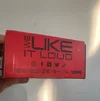
I would want to know what horn or test fixture they used on the driver to measure that response graph. I think they juiced it for the "We Like it LOUD" car audio competition market. Or maybe they just made it up? Who knows?
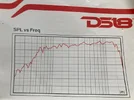
And the current SPL graph looks a lot different and doesn't provide any freq values on the x axis...not a sign of lab grade measurements. It does show a rising characteristic in the upper midrange but, again, on what?
I would want to know what horn or test fixture they used on the driver to measure that response graph. I think they juiced it for the "We Like it LOUD" car audio competition market. Or maybe they just made it up? Who knows?
And the current SPL graph looks a lot different and doesn't provide any freq values on the x axis...not a sign of lab grade measurements. It does show a rising characteristic in the upper midrange but, again, on what?
Last edited:
Yeah and fwiw I don’t think an auto former will attenuate these enough. They need 14-15db of attenuation to match a 416-8C based on my measurements. Don’t write them off for that cardboard box graphic, they measure damn good. Brightness is often 3-4k, a rise after 10k is actually common and most people enjoy it.
J-ROB
Site Supporter
The Jagush autoformer has 15 steps (-1 or -1.5dB, still not sure) and barely pulled it off. The 728B is not as efficient as Altec woofers either. My Altec 802s were matched with 728s at four steps less attenuation than the DS18s. I know because I can see the wires that connected them. This sucker is loud. If I ever find my autoformer docs, I could put a number on it.
My reading of the DS18 marketing is that they are in the car audio business, not specialist hifi or even pro audio. The driver itself is probably some third party Chinese thing made from catalog parts, which is not to say that it isn't a decent driver. I just wouldn't expect useable JBL Pro or Altec Pro tier technical specs from this outfit and I don't believe I'm getting them at all from the factory brochures.
A rise after 10k is not really that common in compression drivers and when I see extension much above 10k I suspect uncorrelated ringing due to mechanical resonances filling in the SPL vs frequency graph. I don't think any of these drivers has low enough mass in a large diaphragm to actually follow the signal that high. However, nothing about the DS18 bugs me and I dumped a number of highly touted compression drivers that sure did so...TAD, JBL, etc. Maybe this is part of what a phenolic diaphragm gets you? Seems quite well damped.
My main complaint about the DS18 driver is that it features the worst terminals I ever saw. I can't even get a 16ga wire through the holes. They seem to be integral to the diaphragm so maybe hard to change even if motivated to do so.
I had mine attenuated on the -9dB tap of the Klipsch T2A autoformer. A ported LaScala is right at 100dB (with an 8Ω woofer) so this falls in line with the stated 109dB efficiency of the DS18 driver.
I think some actual design went into this driver based on its fairly extended response which you typically do not see in a driver of this category. The shallow diaphragm, phase plug design and small throat (expanding to a 2" exit) all contribute to its sonic output.
The attached white paper is a good read.
Attachments
J-ROB
Site Supporter
Undoubtedly there is some engineering behind this driver, but we don't know who did it and we don't have access to the thinking the way we do with a pro company like JBL. as this very interesting white paper demonstrates.
When i encounter the notion of "controlled resonances," I am a bit suspicious. Controlled for what? Frequency response, obviously...but the graphs show high levels of distortion at/above 10k, especially with higher input levels although the FR plot looks innocent.
The paper suggests that the inherent nature of compression drivers is to roll off due to mass and mechanical characteristics of the diaphragm and FR can be extended by EQ and/or resonance tricks.
My backwoods language for "controlled resonances" is TIZZ. What I'm calling TIZZ has led me to sell off many drivers and tweeters in my junk collecting career and triggered an eyes bugged out flight or flight reaction in front of so many stupid expensive high end speakers with bad (albeit expensive) tweeters.
In the pro sound or car audio realm, this tizz factor might come into play less than in a home system that we'd sit in front of listening to intently for weeks months years. Sometimes it takes a while to realize that a particular sound effect is burning me out, making me bored, anxious or comfortable, but when I learn that it feels that way, I believe it.
And for me, this actual conditions of use testing trumps empirical measuring devices. There is more to the story than base frequency response measurements and extended music listening fleshes out that problematic in a functionally relevant way.

I have an unproven theory that the HiFi use cases for these car audio compression drivers are more coincidental than intentional. While there are some overlapping criteria, car audio favors high SPL more than we do for home hifi use and the spaces which competition car audio operates are radically different than the average home setup, treated or not. The ultra high sensitivity that many of these drivers exhibit, speaks to that, as does the prevalence of titanium diaphragms, which tend to favor durability at high SPLs rather than SQ at levels below 90dB. That some of thee drivers work remarkably well in home audio setups, notably the PRV D2200PH, D4500Ph-ND and now the DS18 Pro drivers we're discussing here, is merely happenstance. We are not their target market and horn enthusiasts aren't even a significant bloc within DIY speaker building, which seems to favor cone and dome construction, that generally appears to have fewer factors to consider in terms of design and construction, at least at the basic level.Undoubtedly there is some engineering behind this driver, but we don't know who did it and we don't have access to the thinking the way we do with a pro company like JBL. as this very interesting white paper demonstrates.
When i encounter the notion of "controlled resonances," I am a bit suspicious. Controlled for what? Frequency response, obviously...but the graphs show high levels of distortion at/above 10k, especially with higher input levels although the FR plot looks innocent.
The paper suggests that the inherent nature of compression drivers is to roll off due to mass and mechanical characteristics of the diaphragm and FR can be extended by EQ and/or resonance tricks.
My backwoods language for "controlled resonances" is TIZZ. What I'm calling TIZZ has led me to sell off many drivers and tweeters in my junk collecting career and triggered an eyes bugged out flight or flight reaction in front of so many stupid expensive high end speakers with bad (albeit expensive) tweeters.
In the pro sound or car audio realm, this tizz factor might come into play less than in a home system that we'd sit in front of listening to intently for weeks months years. Sometimes it takes a while to realize that a particular sound effect is burning me out, making me bored, anxious or comfortable, but when I learn that it feels that way, I believe it.
And for me, this actual conditions of use testing trumps empirical measuring devices. There is more to the story than base frequency response measurements and extended music listening fleshes out that problematic in a functionally relevant way.
J-ROB
Site Supporter
Yeah, if the DS18s were targeted to audiophiles, they would cost at least $600!! 😁
Which pro sound drivers were even intended primarily for home listening? Even the 1" Altecs were fundamentally pro parts playing a dual role. Anything after, say. the Altec 19 era had nothing to do with home hifi because nobody was listening to horns in the home. Even now, with horn speakers a legitimate subculture in home audio, a small fraction of the drivers end up being used in this context.
We might think extreme car audio is a weird exotic subculture but there are almost certainly more of them than us!

PRO 8" Slim Neodymium Mid-Range Loudspeaker with Bullet | 500W 4-Ohm
DS18 PRO-NEO8SLIM PRO 8" Shallow Neodymium Mid-Range Loudspeaker with Bullet 500 Watts 4-Ohm DS18 PRO-NEO8SLIM amassed a wealth of experience in manufacturing the most elegant neodymium midranges for those seeking simple perfection. Neodymium magnets provide a higher magnetic flux density in the...
 ds18.com
I know it’s off topic but it’s DS18 related. I always wanted to buy these and see if they could be 755a replacements. Specs are pretty good. 4 ohm VC and extremely low inductance

Topper
Site Supporter
I bet they sound great and just like a 755 when you put 500 watts into them!I know it’s off topic but it’s DS18 related. I always wanted to buy these and see if they could be 755a replacements. Specs are pretty good. 4 ohm VC and extremely low inductance
This would be closer to a "real" full range 8". Price is not too bad.

 www.lii-song.com
One Pair | New 8" Fullrange Drivers | Fine and clear sound | Fast-8 - Lii Song (丽颂), unique speaker, amplfier, quality and cost-saving parts for HiFi DIY
Technical Data: 1. PMSE-Free 0.42 Ohms 2. Fs 47 Hz 3. Re 6.33 Ohms(dc) 4. Res 64.66 Ohms 5. Qms 7.10 6. Qes 0.69 7. Qts 0.62 8. L1 0.10 mH 9. L2 0.68 mH 10.R2 3.73 Ohms 11.RMSE-load 0.36 Ohms 13.Vas(sd) 69.7 liters 14.Mms 10.28 grams 15.Cms 1084 uM/Newton 16.Bl 5.15 Tesla-M 17.Splref(sd) 94...
www.lii-song.com
Change the phase plug…PRO 8" Slim Neodymium Mid-Range Loudspeaker with Bullet | 500W 4-Ohm
DS18 PRO-NEO8SLIM PRO 8" Shallow Neodymium Mid-Range Loudspeaker with Bullet 500 Watts 4-Ohm DS18 PRO-NEO8SLIM amassed a wealth of experience in manufacturing the most elegant neodymium midranges for those seeking simple perfection. Neodymium magnets provide a higher magnetic flux density in the...
I know it’s off topic but it’s DS18 related. I always wanted to buy these and see if they could be 755a replacements. Specs are pretty good. 4 ohm VC and extremely low inductance
I know too easy…ha.ha,ha
