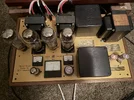
After 40 years in this crazy hobby of ours, I have zeroed in on the type of sound I like. I have been going deeper and deeper into the high-efficiency, Single Ended flea power amplifiers rabbit holes. One thing I have learned is that while the contributions of the individual components obviously matter, the goal is to achieve a composite resultant sound at the listening chair that you enjoy or are after. I have explored many of the different component design and system topologies in the home audio reproduction universe and have come to greatly appreciate the sound of Type 45, triode strapped 46, and 183/483 tubes used in the output stage. These have become my favorite output tubes, but I have and have heard great results with other tubes and many different designs.
The hearing Type 45 for the first time on a pair of Bottlehead Paramour 45 built by Will Vincent put me in a world beyond the 300B and 2A3 SET amplifiers and sent me on a deep dive down the 45 rabbit hole. I then got a got a pair of Bottlehead Paramour II 45 monoblock with the iron, capacitor, and shunt-regulated upgrade and my ears and mind became intoxicated with that sound of clarity, intimacy, articulation, texture and musicality that the 45 tube deliver. I asked my friend Sean Casper to build me a pair of his reference 45 monoblocks and they have serve me as a datum to evaluating amplifier of lol kinds and power. Since those early days, I have been fortunate to have had the opportunity to acquire other Type 45 amplifiers that deliver their magic in different flavors and with different strengths and weaknesses.
I’m a firm believer that the best value in our hobby is found with the offerings from hobbyists who share their passion with others by offering their builds or services to those of us with limited time and devoid of the skills necessary to to tackle the DIY builds of these relative simple but deeply complex amplifiers as every little thing counts. I have a passion for challenging myself to assemble different systems that to my ears sound great in the typical homeroom domestic environment without the need for the lunacy or even the aesthetics that the audiophile world now seemingly requires for good sound.
To get to the purpose of this post, the commercial side of the audio world has shown very little to no interest on such low power amplifiers as they require efficient speakers to work and that is against the trend of higher power amplifier, specially now that class D amplifiers have become more widely accepted, and multi-driver speaker systems that are inefficient, have complex crossovers, and demanding impedance curves.
But two brands in the mainstream audio/ audiophile world’s consciousness that have produced commercially available 45 either as catalog products or custom-shop offerings are Audio Note UK and Wavelength Audio. Wavelength Audio blurs the lines between a bonafide commercial brand and a DIY builder as Gordon Rankin personally builds each unit and his custom shop builds are each unique and configured with Gordon or customer selected options at different levels of madness.
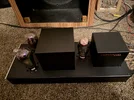
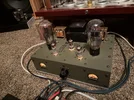
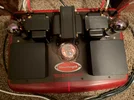
Recently I was fortunate enough to acquired the best or highest build configuration of the AudioNote Paladin 45 amplifier, which has now been sadly discontinued and not longer offered, and what I consider Gordon Rankin’s best Wavelength Audio 45 custom shop builds. I was/am really impressed by the sound of these 45 amplifiers, so much so that I wanted to do a direct comparison of their sound in the same identical system, with nothing changed accept the amplifier themselves. Everything was the same, cables, power cord, etc, in every case except the amplifier in use.
These all sounded fantastic to me, so much so that I could not pick a favorite in real time. So I did some audio recordings of the same songs/tracks with each amplifiers to see if a postmortem analysis could yield a clear winner.
What do you think?
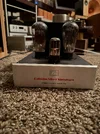
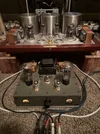
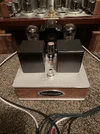
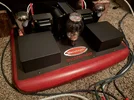
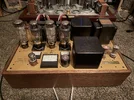
I have 11 or 12 Type 45 amplifiers at home at this time so there is another five or six to compare, including the Thomas Mayer 45, Sean Casper 45 monoblocks, Jeff Korneff 45, the Bottlehead Paramour I and II series Monoblocks, Isamu Asano Loftin -White 45, the Tadaatsu Atarashi 45 push-pull monoblock amps, and the mighty James “Jim” Burgess 3-stage 45 amplifiers still to compare but the logistics and floor space required may not allow those comparisons any time soon but I wanted to share my excitement and experience over the past few weeks with the group. Let me know which sounds you find best to you on these audio recordings.
The hearing Type 45 for the first time on a pair of Bottlehead Paramour 45 built by Will Vincent put me in a world beyond the 300B and 2A3 SET amplifiers and sent me on a deep dive down the 45 rabbit hole. I then got a got a pair of Bottlehead Paramour II 45 monoblock with the iron, capacitor, and shunt-regulated upgrade and my ears and mind became intoxicated with that sound of clarity, intimacy, articulation, texture and musicality that the 45 tube deliver. I asked my friend Sean Casper to build me a pair of his reference 45 monoblocks and they have serve me as a datum to evaluating amplifier of lol kinds and power. Since those early days, I have been fortunate to have had the opportunity to acquire other Type 45 amplifiers that deliver their magic in different flavors and with different strengths and weaknesses.
I’m a firm believer that the best value in our hobby is found with the offerings from hobbyists who share their passion with others by offering their builds or services to those of us with limited time and devoid of the skills necessary to to tackle the DIY builds of these relative simple but deeply complex amplifiers as every little thing counts. I have a passion for challenging myself to assemble different systems that to my ears sound great in the typical homeroom domestic environment without the need for the lunacy or even the aesthetics that the audiophile world now seemingly requires for good sound.
To get to the purpose of this post, the commercial side of the audio world has shown very little to no interest on such low power amplifiers as they require efficient speakers to work and that is against the trend of higher power amplifier, specially now that class D amplifiers have become more widely accepted, and multi-driver speaker systems that are inefficient, have complex crossovers, and demanding impedance curves.
But two brands in the mainstream audio/ audiophile world’s consciousness that have produced commercially available 45 either as catalog products or custom-shop offerings are Audio Note UK and Wavelength Audio. Wavelength Audio blurs the lines between a bonafide commercial brand and a DIY builder as Gordon Rankin personally builds each unit and his custom shop builds are each unique and configured with Gordon or customer selected options at different levels of madness.
Recently I was fortunate enough to acquired the best or highest build configuration of the AudioNote Paladin 45 amplifier, which has now been sadly discontinued and not longer offered, and what I consider Gordon Rankin’s best Wavelength Audio 45 custom shop builds. I was/am really impressed by the sound of these 45 amplifiers, so much so that I wanted to do a direct comparison of their sound in the same identical system, with nothing changed accept the amplifier themselves. Everything was the same, cables, power cord, etc, in every case except the amplifier in use.
These all sounded fantastic to me, so much so that I could not pick a favorite in real time. So I did some audio recordings of the same songs/tracks with each amplifiers to see if a postmortem analysis could yield a clear winner.
What do you think?
I have 11 or 12 Type 45 amplifiers at home at this time so there is another five or six to compare, including the Thomas Mayer 45, Sean Casper 45 monoblocks, Jeff Korneff 45, the Bottlehead Paramour I and II series Monoblocks, Isamu Asano Loftin -White 45, the Tadaatsu Atarashi 45 push-pull monoblock amps, and the mighty James “Jim” Burgess 3-stage 45 amplifiers still to compare but the logistics and floor space required may not allow those comparisons any time soon but I wanted to share my excitement and experience over the past few weeks with the group. Let me know which sounds you find best to you on these audio recordings.
Last edited: