
Hi all! 2nd post here. I picked up the subject unit a few weeks ago. It was sold to me in working condition, and I have been enjoying it as is. I did alot of research and have been trying to come up with a plan to clean it up, but I'm not sure how far I should go. This is my first real system so I don't have any frame of reference, but I think it sounds good as is! I considered just going whole hog for a full re-cap, but I don't know if its really worth doing at the moment. I know there are two camps here: always re-cap vs. fix it when it breaks, but this isn't intended to be a debate on that subject. I'm really just looking for advice on where to look, what I might have overlooked, etc.
So far I have done all the aesthetic stuff: dust, clean, polish, lamps, etc. I installed binding posts for convenience and replaced the missing rubber feet.
The only scratchy control was the secondary source selector. I used de-ox it as well as I could without removing the switch. It helped alot, but did not completely solve it. It will need another go but thats no big deal.
Visually, I don't see any gross cap or component failures. I have a very basic oscilloscope and multimeter, so I checked the following to the best of my abilities (I am new to this)
1) DC offset measurement: Right Ch = 47mV, Left Ch = 25mV
2) 1kHz Sine wave injection: Both channels clean (as far as I can tell on my little toy scope)
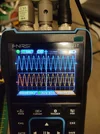
3) 1kHz square wave injection: Some jaggedness. The tone controls were centered for this test, but I could square the corners by adjusting them. Also, the loudness switch seems to be causing some issues. sideways pressure on the switch caused some odd reading, especially on one of the channels.
Before I discovered the issue with the loudness button:
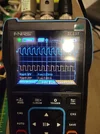
after I jiggled the loudness button:
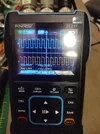
4) 10kHz square wave: This looked pretty good
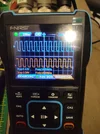
5) Power output: 1kHz sine wave injected and volume increased to clipping. RMS voltage measured and used to calculate power, which came out to ~35W per channel with both channels operating. I used 8W dummy loads. The manual says rated power is 40W, so I guess that's not bad for 50 y/o.
6) I DIDNT measure DC bias yet. Also I had read somewhere that the old trim pots for bias and offset are a weak point, and I would be better off replacing them before I every try to adjust them, as they can fail to short and fry the output transistors. Is this accurate? If so I am inclined to just leave them alone.
I suppose I can measure stuff all day, but what really matters is what it sounds like, right? I think it sounds good! However, I think my turntable is the weak link in the chain, so I can't really say if I hear an issue that is related to the receiver.
Sorry this got so lengthy, but the TL R is this: If I am not going to shotgun re-cap this thing, is there anything in these results that I should address right away, or just enjoy some tunes for a while?
Gratuitous polish and re-lamp shot!
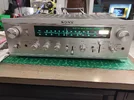
Thank you to anyone who made it to the end of my novena!
So far I have done all the aesthetic stuff: dust, clean, polish, lamps, etc. I installed binding posts for convenience and replaced the missing rubber feet.
The only scratchy control was the secondary source selector. I used de-ox it as well as I could without removing the switch. It helped alot, but did not completely solve it. It will need another go but thats no big deal.
Visually, I don't see any gross cap or component failures. I have a very basic oscilloscope and multimeter, so I checked the following to the best of my abilities (I am new to this)
1) DC offset measurement: Right Ch = 47mV, Left Ch = 25mV
2) 1kHz Sine wave injection: Both channels clean (as far as I can tell on my little toy scope)
3) 1kHz square wave injection: Some jaggedness. The tone controls were centered for this test, but I could square the corners by adjusting them. Also, the loudness switch seems to be causing some issues. sideways pressure on the switch caused some odd reading, especially on one of the channels.
Before I discovered the issue with the loudness button:
after I jiggled the loudness button:
4) 10kHz square wave: This looked pretty good
5) Power output: 1kHz sine wave injected and volume increased to clipping. RMS voltage measured and used to calculate power, which came out to ~35W per channel with both channels operating. I used 8W dummy loads. The manual says rated power is 40W, so I guess that's not bad for 50 y/o.
6) I DIDNT measure DC bias yet. Also I had read somewhere that the old trim pots for bias and offset are a weak point, and I would be better off replacing them before I every try to adjust them, as they can fail to short and fry the output transistors. Is this accurate? If so I am inclined to just leave them alone.
I suppose I can measure stuff all day, but what really matters is what it sounds like, right? I think it sounds good! However, I think my turntable is the weak link in the chain, so I can't really say if I hear an issue that is related to the receiver.
Sorry this got so lengthy, but the TL
R is this: If I am not going to shotgun re-cap this thing, is there anything in these results that I should address right away, or just enjoy some tunes for a while?Gratuitous polish and re-lamp shot!
Thank you to anyone who made it to the end of my novena!


